 By Hina
For three years, my bed was tucked into a corner of my bedroom. I thought that was the right way to do it. Then one day, I pulled the bed 18 inches away from the wall. The result? My room suddenly felt so much larger — as if I had moved into a brand-new space.
This experience taught me that bedroom furniture arrangement isn’t just about decorating — it’s a science. Today, I’ll share all the techniques I’ve learned — the same ones used by top interior designers. Let's check the best and new trendy Bedroom Furniture Arrangement Ideas.
1. The Command Position: The Best Way to Place Your Bed
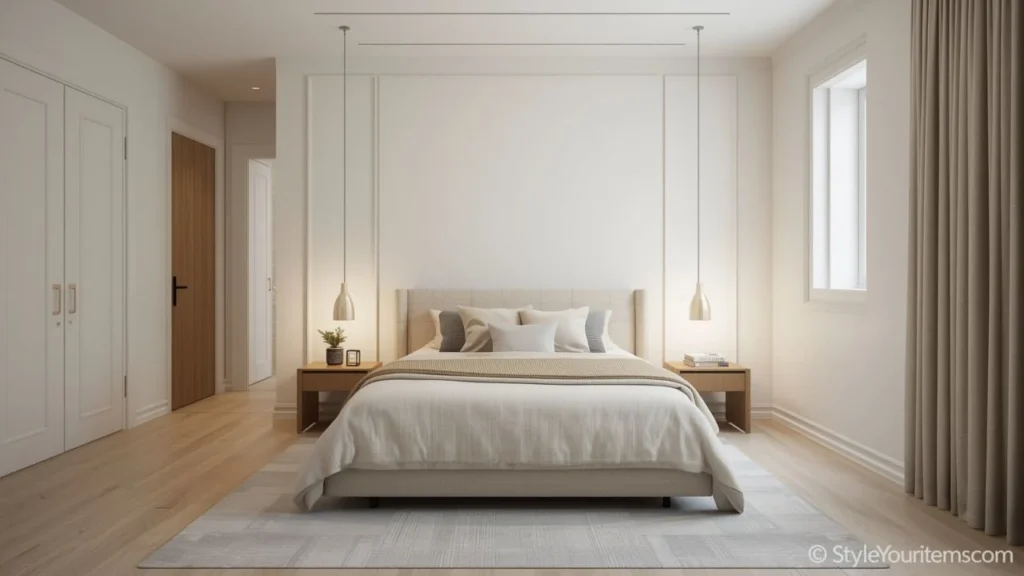
Interior designers and Feng Shui experts agree: the best position for a bed is where you can see the door without being directly in front of it.
Check more designs: Bedroom Decor Ideas 2026: Transform Your Bedroom with These Stunning Designs
Why It Works:
- Creates a sense of mental security and calm
- Mimics hotel layouts (designed for comfort and flow)
- Improves energy movement in the room
Measurement:
Leave at least 24 to 36 inches of walkway on both sides of the bed.
2. Centered Bed: For Medium to Large Rooms
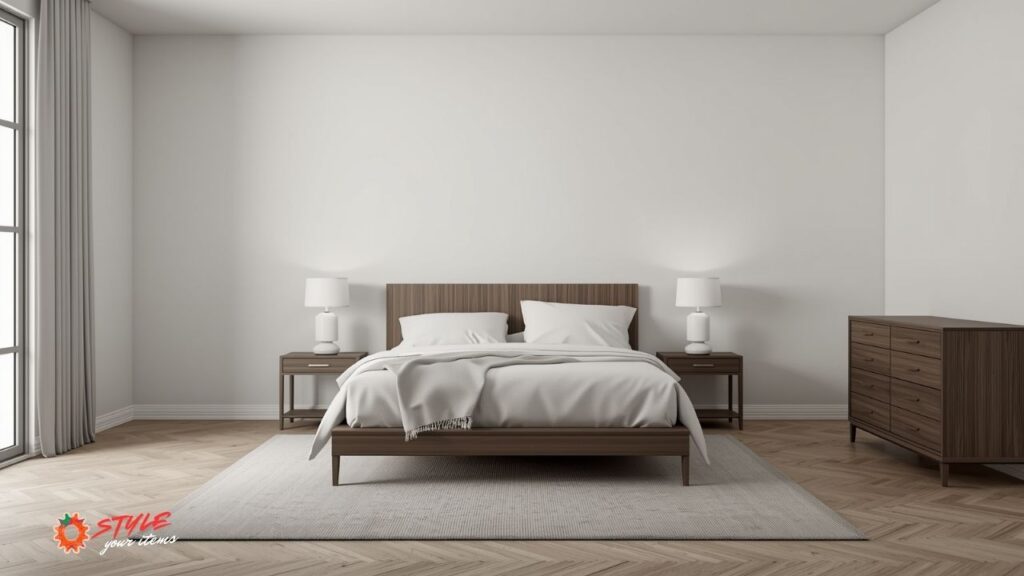
If your bedroom is 10×12 feet or larger, center the bed on the main wall. You need the cozy bedroom ideas and latest designes, this can be a good option for you.
| Room Size | Bed Placement | Additional Furniture |
|---|---|---|
| Small (8×10 ft) | Corner or against one wall | One nightstand + floating shelves |
| Medium (10×12 ft) | Centered on wall | Two nightstands + dresser |
| Large (12×14+ ft) | 18–24 inches from wall (floating) | Seating area + bench |
Pro Tip: In larger rooms, pull the bed slightly away from the wall — it creates a more polished, intentional look.
3. Corner Bed: The Secret Formula for Small Rooms
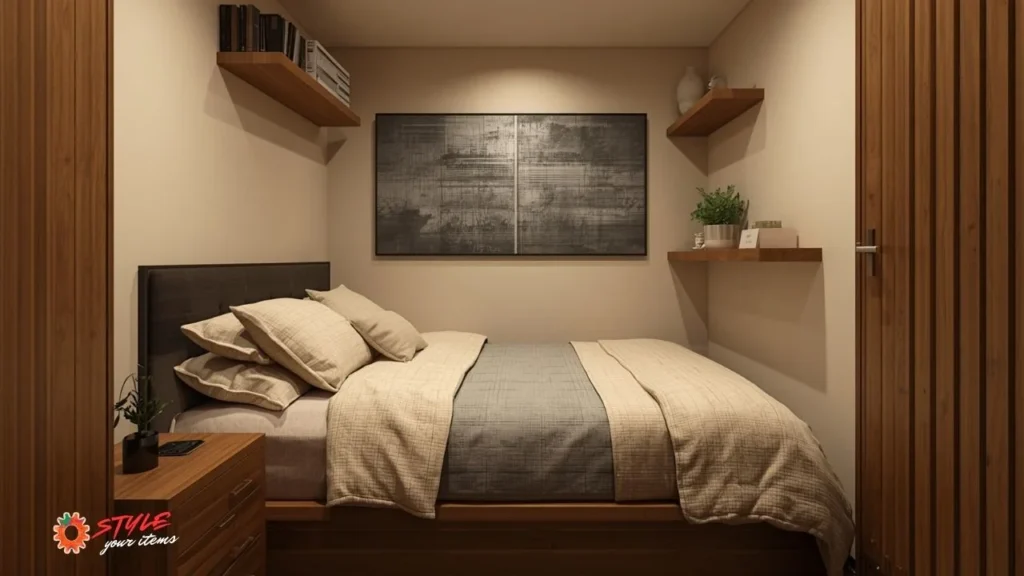
Placing the bed in a corner is the best space-saving hack for small rooms — it opens up the center.
How to Do It:
- Place the headboard against one wall.
- Let the long side rest against the adjacent wall.
- Install wall-mounted shelves on the corner side (instead of a nightstand).
- Place a small night table on the opposite side.
My Experience: In my 9×10 ft room, this layout freed up enough space for a reading chair.
4. Zoning: Divide a Large Room into Three Zones
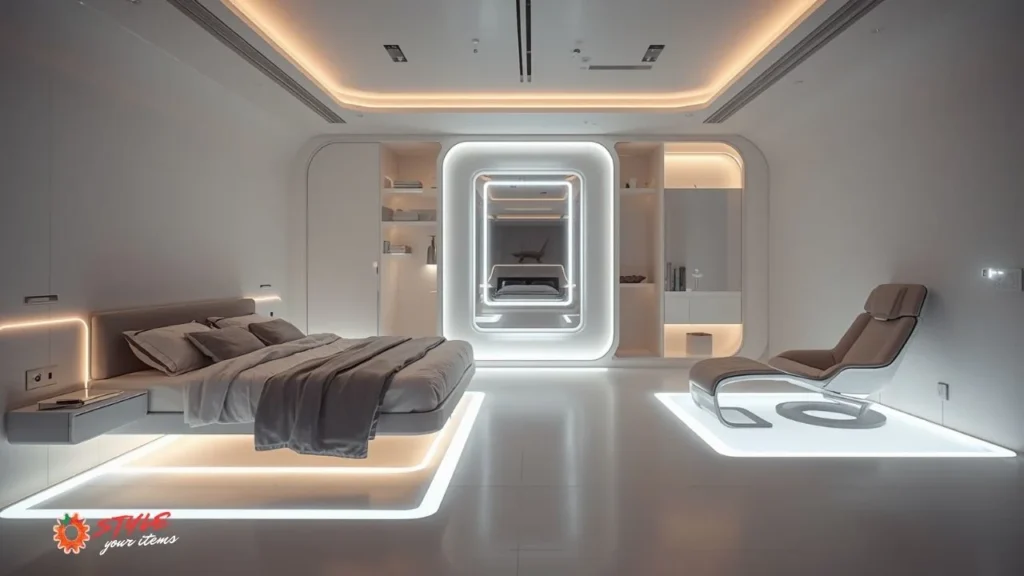
The biggest mistake? Pushing all furniture against the walls makes the room feel empty.
Smart Zoning:
- Sleeping Zone: Bed + two nightstands
- Dressing Zone: Dresser + mirror (+ bench if space allows)
- Relaxing Zone: Chair or small sofa + floor lamp
Design Tip: Use rugs to define each zone — it instantly makes the room feel organized and intentional.
5. Floating Furniture: The Trick to Making a Small Room Feel Bigger

The first time I installed floating nightstands, my room looked like it had doubled in size.
Benefits:
- Floor stays visible → room feels larger
- Easier to clean
- Modern, minimalist aesthetic
Where to Use It:
- Wall-mounted shelves instead of nightstands
- Wall-mounted cabinets instead of dressers
- Wall sconces instead of bedside lamps
6. Traffic Flow: Calculating Space for Movement
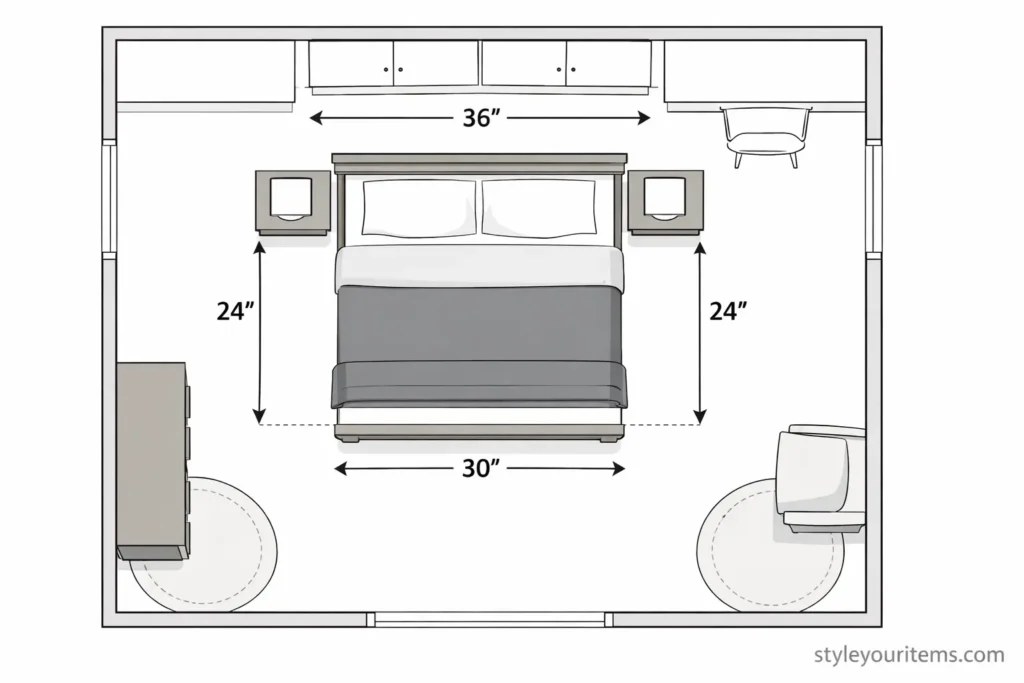
Most people overlook this, but smooth movement is key to a functional bedroom.
Golden Rules:
- Foot of bed to wall: 24–36 inches
- Each side of the bed: At least 24 inches (if in a corner, one side is enough)
- In front of closet: 36 inches (for full door swing)
- Between bed and dresser: 30 inches
Remember: The best layouts look good and feel effortless to move through.
7. Diagonal Layout: For Drama & Focal Points
Want to make a statement? Place the bed at a 45-degree angle in a corner.
When to Use It:
- The room is roughly square
- You want a strong focal point
- Corners feel empty
Note: This layout leaves space behind the bed — best for larger rooms only.
Quick Reference Table: Best Layout by Room Size
| Room Size | Best Layout | What to Avoid |
|---|---|---|
| 8×10 ft (Small) | Corner bed + floating shelves | Heavy dresser, two nightstands |
| 10×12 ft (Medium) | Centered bed + two nightstands | Bed pushed flat against wall |
| 12×14+ ft (Large) | Floating bed + zoning | All furniture against walls |
| Studio Apartment | Room divider + multifunctional furniture | Too much furniture in one space |
Frequently Asked Questions (FAQ) - Bedroom Furniture Arrangement Ideas
Can I place the bed in front of a window?
Are two nightstands necessary?
What size rug should I use?
Where to place the closet in a small room?
Conclusion: The Simple Formula
Arranging bedroom furniture doesn’t have to be hard. Just remember:
Small Room = Corner bed + floating shelves + minimal furniture
Medium Room = Centered bed + two nightstands + good traffic flow
Large Room = Floating bed + zoning + seating area
Pro Tip: Measure your room, sketch a layout, then buy furniture. A little effort up front = years of comfort.
Now it’s your turn: Which change will you make first? Let me know — I’d love to hear how it transforms your space.